5 Hurricane Preparation Tips Every Florida Homeowner Should Know Before Storm Season
Florida’s hurricane season runs from June through November — and every year, homeowners scramble to prepare when a storm is already on the radar. But the smartest thing you can do is prepare before the season starts.
Here are five critical steps every Florida homeowner should take to protect their property, their family, and their wallet.
1. Get a Professional Roof Inspection
Your roof is your home’s first line of defense against hurricane-force winds and heavy rain. Even minor damage — cracked shingles, loose flashing, or worn sealant — can turn into a catastrophic failure during a storm.
A professional roof inspection costs far less than an emergency repair after a hurricane. An inspector will check for:
- Missing, cracked, or curling shingles
- Damaged or rusted flashing around vents, chimneys, and skylights
- Worn roof sealant and caulking
- Loose gutters and downspouts
- Signs of water intrusion in your attic
If your roof is more than 15 years old, consider upgrading to impact-rated roofing materials that meet Florida’s current building codes.
2. Upgrade to Impact-Resistant Windows and Doors
Standard windows are one of the weakest points in your home during a hurricane. When wind-driven debris shatters a window, it creates pressure changes inside your home that can blow off the roof from the inside out.
Impact windows and doors are designed to withstand flying debris at hurricane speeds. They also provide year-round benefits:
- Better energy efficiency (lower A/C bills)
- Noise reduction
- UV protection for furniture and flooring
- Potential insurance discounts of 15–45%
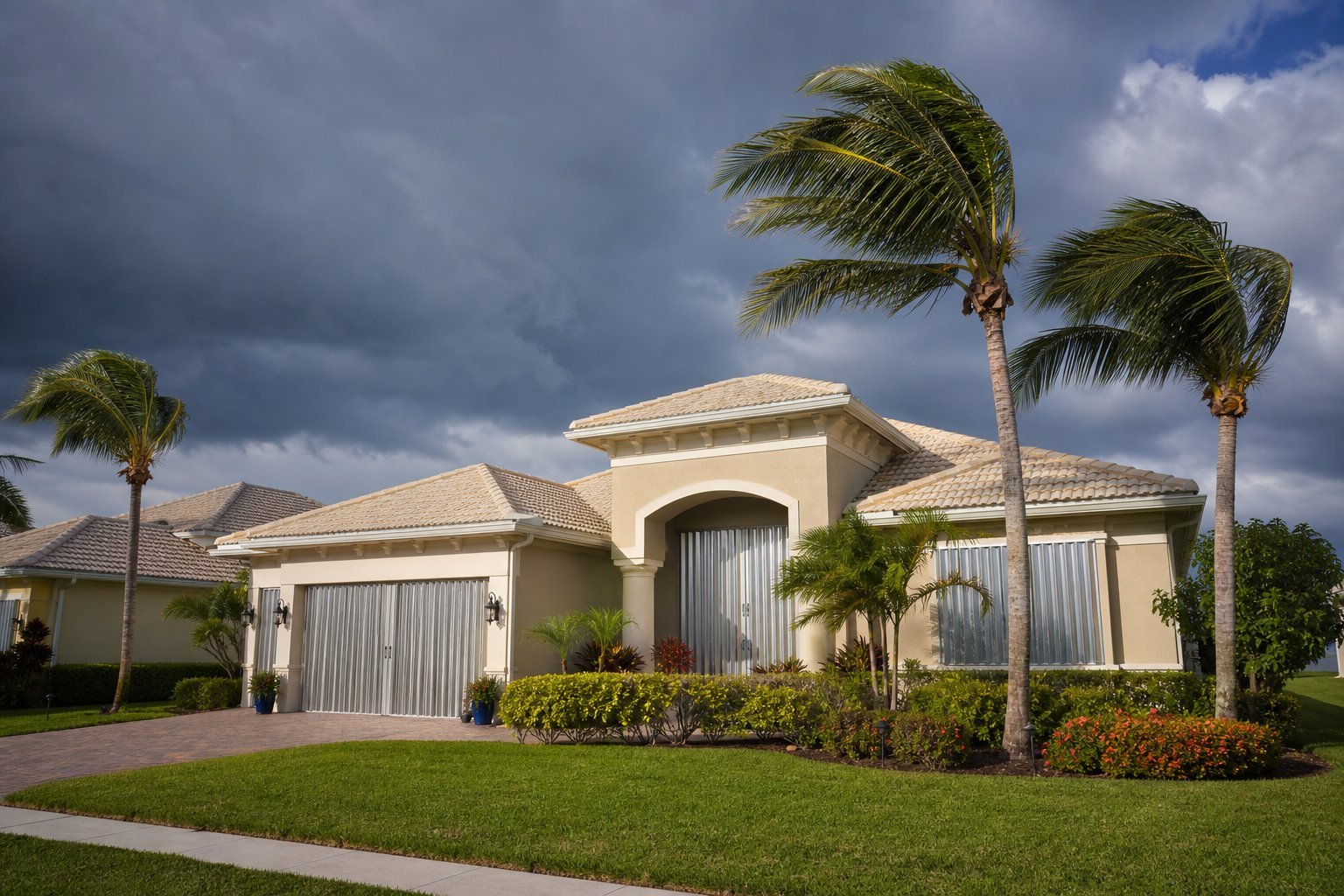
If full window replacement isn’t in your budget, install hurricane shutters as a cost-effective alternative.
3. Review and Update Your Insurance Policy
Don’t wait until a storm is approaching to read your insurance policy. Many homeowners are shocked to discover their coverage has gaps when they need it most.
Before storm season, review:
- Wind damage coverage: Some policies exclude wind or have separate hurricane deductibles (often 2–5% of your home’s insured value).
- Flood insurance: Standard homeowner’s insurance does NOT cover flooding. Consider a separate flood policy.
- Coverage amounts: Make sure your dwelling coverage reflects current replacement costs.
- Documentation: Take photos and videos of every room. Store these in the cloud.
4. Secure Your Yard and Outdoor Areas
Anything in your yard can become a projectile in hurricane winds. Even a lightweight patio chair can do serious damage at 100+ mph.
Create a plan to quickly secure:
- Patio furniture, grills, and planters
- Trampolines, swing sets, and pool equipment
- Trash cans and recycling bins
- Garden tools, hoses, and decorations
Trim trees and remove dead branches regularly throughout the year. Overhanging limbs are one of the most common causes of roof damage during storms.
5. Build a Hurricane Emergency Kit
Power outages after a hurricane can last days or even weeks. Having a well-stocked emergency kit ensures your family stays safe:
- Water: At least one gallon per person per day for 7 days
- Non-perishable food: Canned goods, protein bars, peanut butter
- Medications: At least a two-week supply of all prescriptions
- Flashlights and batteries
- Important documents: Insurance policies, IDs, medical records in a waterproof container
- Cash: ATMs and card readers won’t work without power
- Portable phone charger: Fully charged before the storm
Don’t Wait for the Warning
The time to prepare for a hurricane is before the season starts — not when a storm is two days away. Taking these steps now can mean the difference between a manageable situation and a devastating loss.
👉 Contact Rebuild Florida Direct for a free home assessment. We’ll inspect your roof, identify vulnerabilities, and help you strengthen your home before the next storm hits.
Rebuild Florida Direct helps Florida homeowners repair, restore, and fortify their properties against hurricane damage. Licensed, insured, and committed to honest, quality workmanship across the state.