How Often Should You Replace Your Roof in Florida?
Florida’s climate is beautiful — but it’s brutal on roofs. The combination of intense UV radiation, heavy rain, high humidity, salt air, and hurricane-season winds means that roofs in Florida wear out faster than in most other states.
At Rebuild Florida Direct, one of the most common questions we hear is: “How long should my roof last?” The answer depends on what it’s made of, how well it was installed, and how well it’s been maintained.
Roof Lifespan by Material in Florida
Here’s how long each common roofing material typically lasts in Florida’s demanding climate:
3-Tab Asphalt Shingles: 12–17 years
These are the most basic and affordable shingles. In cooler, dryer climates they might last 20 years — but Florida’s heat, UV exposure, and storms shorten their effective life significantly.
Architectural (Dimensional) Shingles: 18–25 years
Thicker, more durable, and more wind-resistant than 3-tab shingles. These are the most popular choice for Florida homes and offer good performance for the price.
Metal Roofing (Standing Seam): 40–60+ years
Standing seam metal is one of the most durable options available. It handles Florida’s heat, wind, and rain exceptionally well and requires minimal maintenance over its lifetime.
Concrete Tile: 35–50 years
Extremely durable and common on Florida homes. The tiles themselves can last 50+ years, but the underlayment beneath them typically needs replacement at 20–25 years.
Clay Tile: 50–75+ years
Clay tiles are among the longest-lasting roofing materials. They’re fire-resistant, insect-proof, and handle Florida’s climate well. Like concrete tile, the underlayment underneath may need attention before the tiles do.
Flat Roof Systems (TPO/Modified Bitumen): 15–25 years
Common on flat or low-slope roofs. TPO membranes and modified bitumen systems perform well in Florida but require regular inspection and maintenance for seams and penetrations.
What Shortens Roof Life in Florida
Several factors unique to Florida can reduce your roof’s lifespan below the numbers above:
UV Radiation
Florida receives more solar radiation than almost any other state. UV breaks down the oils in asphalt shingles, dries out sealant strips, and degrades underlayment. This is why shingles in Florida rarely last as long as the manufacturer’s warranty suggests.
Hurricane and Storm Damage
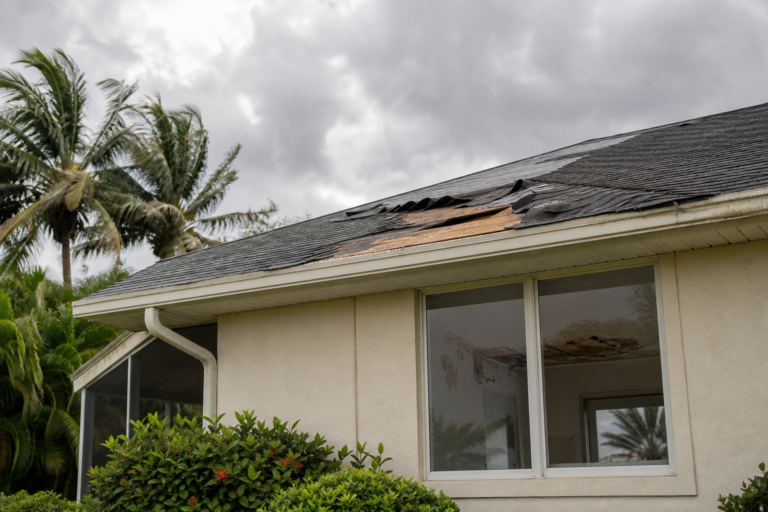
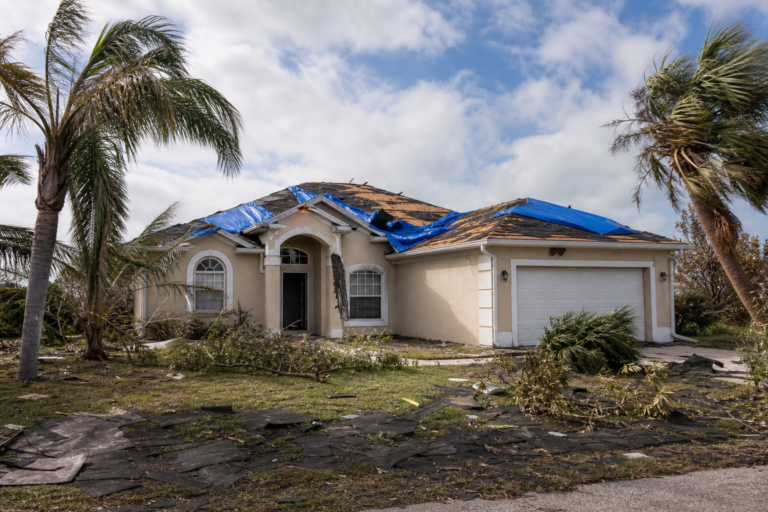
Even if your roof survives a hurricane without visible damage, the stress of high winds can weaken fasteners, break shingle seals, and create micro-cracks that lead to leaks later. Cumulative storm exposure ages roofs faster.
Heavy Rain
Florida averages over 50 inches of rain per year. That volume of water constantly tests your roof’s waterproofing — flashing, sealants, valleys, and underlayment all wear under repeated saturation cycles.
Humidity and Moisture
High humidity promotes algae, mold, and moss growth on roofing materials. It also creates moisture issues in attics with poor ventilation, which can rot decking from the inside out.
Salt Air
Coastal homes face accelerated corrosion of metal components — flashing, vents, fasteners, and drip edge. Salt air can cut 5–10 years off a roof’s life compared to inland installations.
Poor Ventilation
Inadequate attic ventilation traps heat and moisture, which bakes shingles from below and promotes wood rot. Proper ventilation is critical to roof longevity in Florida.
Signs It’s Time to Replace Your Roof
Don’t wait for a leak to decide. Here are the indicators that your roof has reached the end of its useful life:
- Age — If your roof is within 5 years of its expected lifespan, it’s time to start planning
- Widespread granule loss — Heavy granules in gutters or bald spots on shingles
- Multiple leaks or repairs — If you’re patching the same roof every storm season, a full replacement is more cost-effective
- Curling, cracking, or buckling shingles — Signs of age and UV deterioration
- Sagging roofline — A structural problem that requires immediate attention
- Daylight through the roof boards — Visible light in the attic means gaps and potential water entry
- Rising energy bills — A failing roof compromises insulation and ventilation
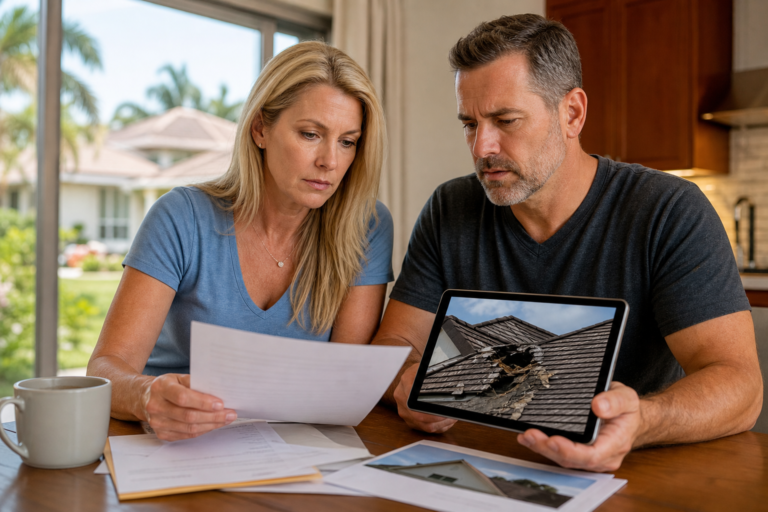
- Insurance pressure — Many Florida insurers now require a roof inspection for policies on homes with roofs older than 15 years, and some won’t renew policies on roofs over 20 years old
The Insurance Factor
In recent years, Florida insurance companies have become increasingly strict about roof age:
- Many require a roof inspection for homes with roofs older than 15 years
- Some won’t write or renew policies on homes with roofs older than 20 years, regardless of condition
- A new roof can significantly reduce your insurance premiums — especially if it meets current building code standards
Replacing your roof before your insurer forces the issue gives you time to choose the right contractor, the right materials, and the right price — rather than rushing under deadline pressure.
How to Extend Your Roof’s Life
- Annual inspections — Catch small problems before they become big ones
- Prompt storm damage repairs — Fix missing shingles and damaged flashing immediately
- Clean gutters regularly — Clogged gutters cause water to back up under your roof
- Trim overhanging trees — Branches scrape shingles and drop debris that traps moisture
- Ensure proper attic ventilation — Balanced intake and exhaust ventilation is critical
- Treat algae and mold — Clean growth before it causes long-term damage
Get Your Roof Assessed by a Pro
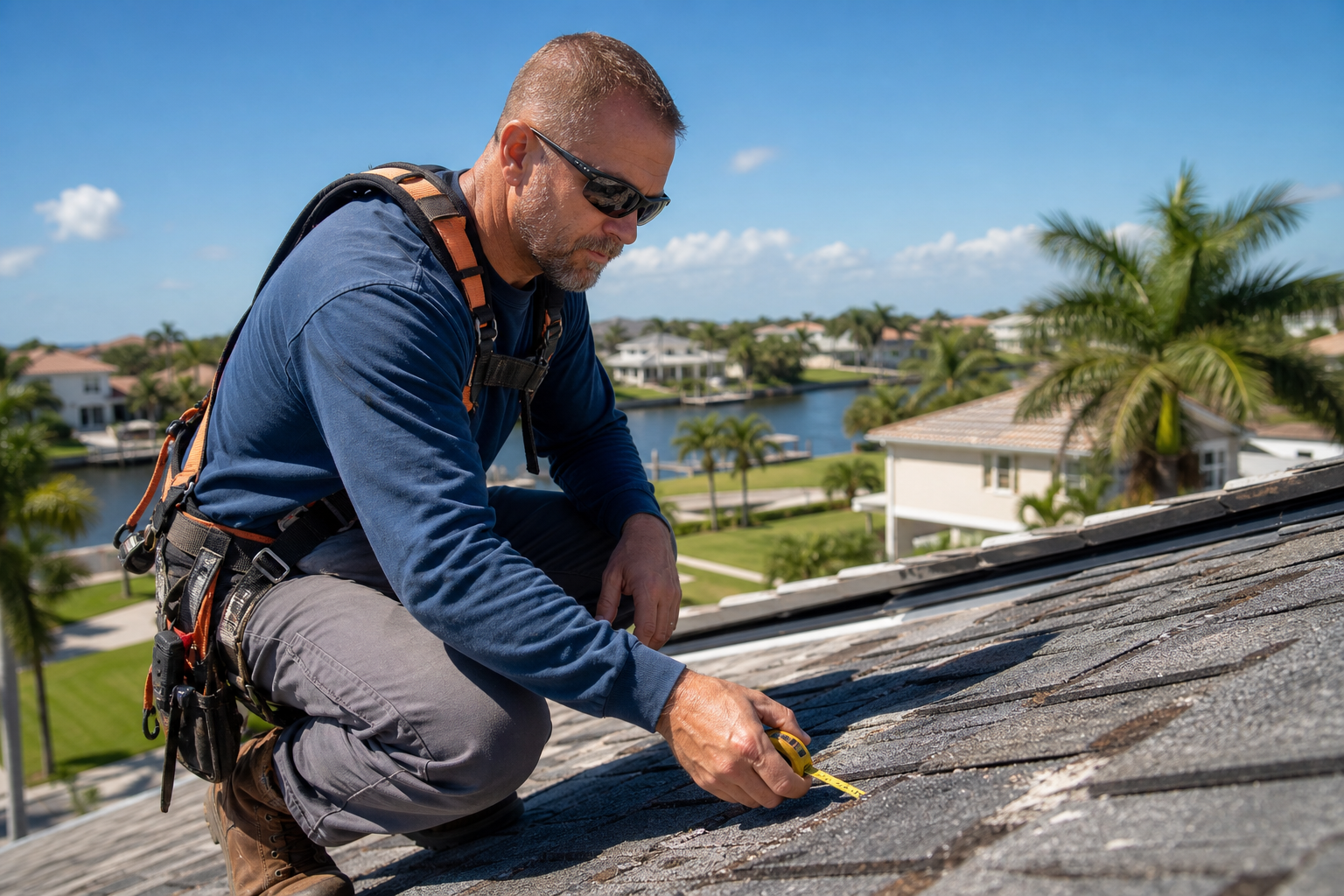
If your roof is approaching the end of its expected lifespan — or if you’re seeing any of the warning signs above — get it professionally inspected before problems escalate.
👉 Contact Rebuild Florida Direct to schedule your free roof inspection. We’ll assess your roof’s current condition, give you an honest estimate of its remaining life, and provide options if it’s time for a replacement.
Rebuild Florida Direct is a licensed, insured roofing contractor serving homeowners across the state of Florida. We specialize in storm damage repair, full roof replacements, and honest inspections — no gimmicks, no pressure.