What to Do After a Hurricane Damages Your Roof in Florida
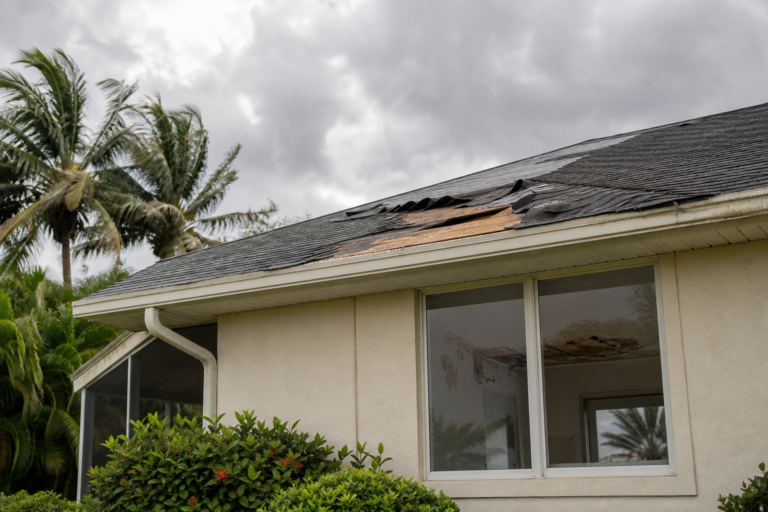
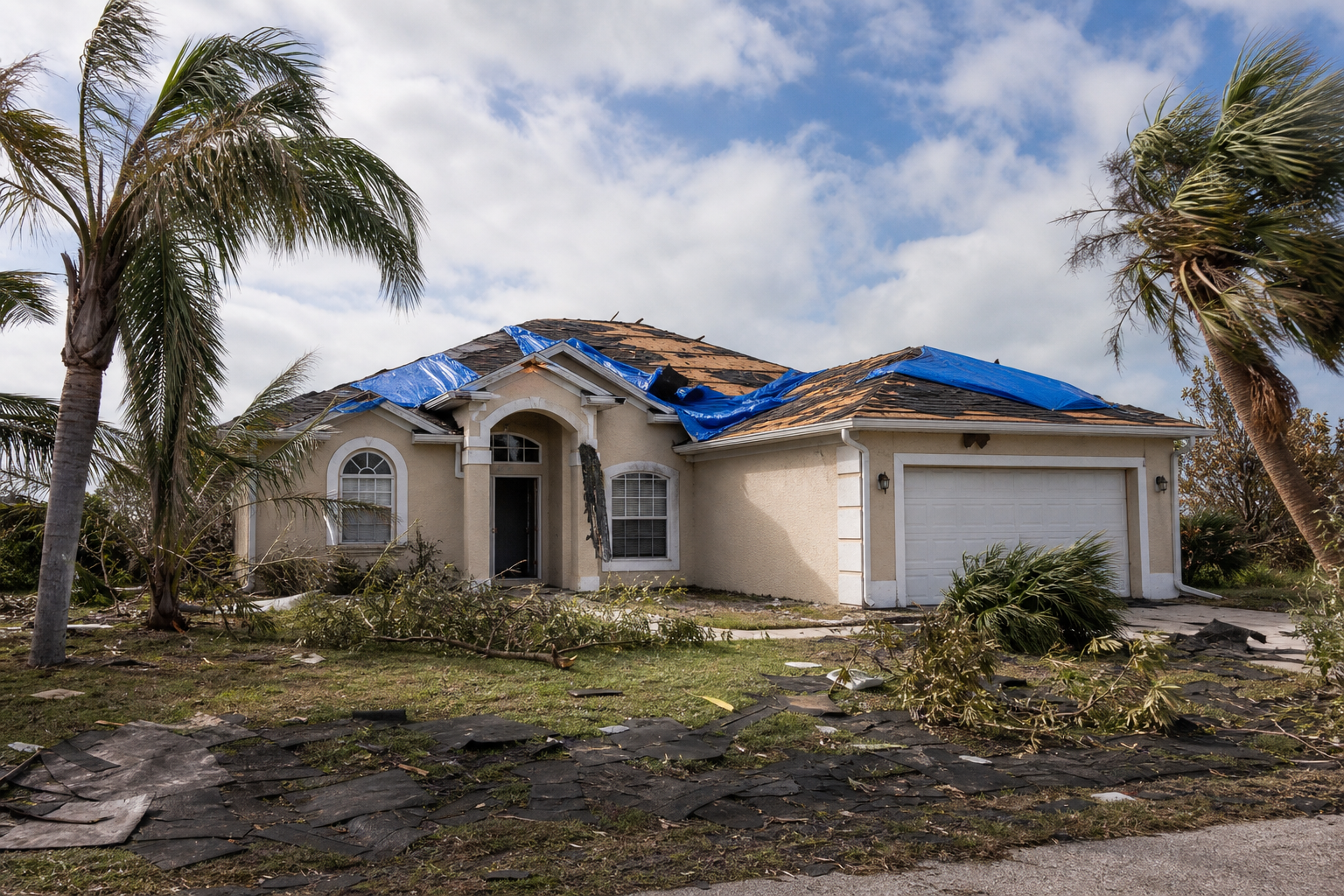
When a hurricane hits Florida, your roof takes the worst of it. High winds, flying debris, and torrential rain can cause damage ranging from a few missing shingles to a complete structural failure. What you do in the hours and days after the storm can make the difference between a smooth recovery and a nightmare.
At Rebuild Florida Direct, we’ve helped hundreds of homeowners through the post-hurricane process. Here’s exactly what you need to do — step by step.
Step 1: Stay Safe First
Before you even think about your roof, make sure it’s safe to be on your property:
- Wait for the all-clear — Don’t go outside until local authorities confirm the storm has passed
- Watch for downed power lines — Treat every downed wire as live and dangerous
- Don’t walk on a damaged roof — A compromised roof deck can collapse without warning
- Check for gas leaks — If you smell gas, leave immediately and call your utility company
- Avoid standing water — Floodwater can hide electrical hazards and contaminants
Your safety comes first. The roof can wait until conditions are genuinely safe.
Step 2: Document Everything
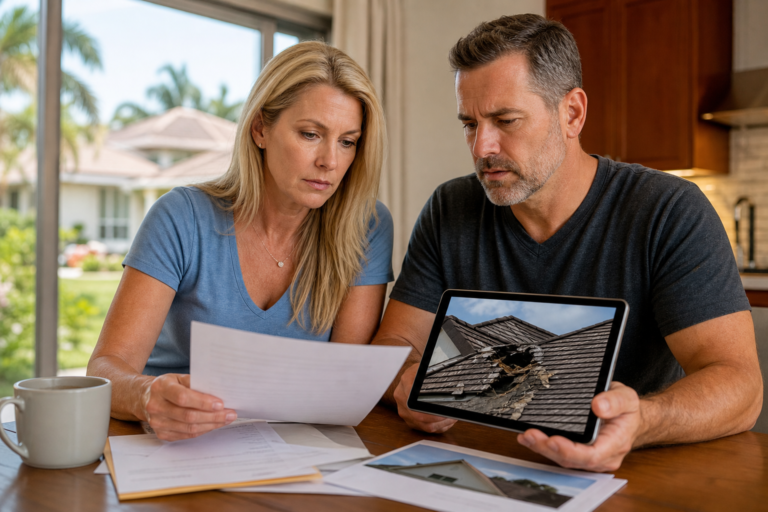
Before you touch anything, grab your phone and start documenting. Your insurance claim depends on thorough documentation:
- Photograph all visible damage from the ground — missing shingles, dents, debris impacts, fallen trees
- Photograph interior damage — water stains on ceilings, wet walls, damaged personal property
- Take wide shots and close-ups — Show the overall scope and the specific details
- Record video walkarounds — Walk the perimeter of your home narrating what you see
- Save timestamped photos — Your phone automatically timestamps photos, which helps prove when damage occurred
The more evidence you have, the stronger your insurance claim will be. Don’t clean up or make permanent repairs before documenting.
Step 3: Prevent Further Damage
Florida insurance policies require you to take reasonable steps to prevent additional damage after a covered event. This is called mitigation, and it’s your responsibility:
- Tarp exposed areas — Cover any holes or missing sections with a heavy-duty tarp secured with boards or sandbags
- Remove standing water — Use buckets, towels, or a wet/dry vacuum to prevent mold growth
- Board up broken windows — Prevent rain from entering through broken glass
- Move belongings away from leaks — Protect furniture, electronics, and valuables from ongoing water damage
Keep receipts for any materials you buy for temporary repairs. These costs are typically reimbursable through your insurance claim.
Step 4: Contact Your Insurance Company
File your claim as soon as possible. After a major hurricane, insurance companies receive thousands of claims simultaneously — the earlier you file, the sooner an adjuster will be assigned:
- Call your insurance company’s claims hotline — Most have 24/7 storm response lines
- Provide your policy number and basic damage description
- Ask about your deductible — Florida hurricane deductibles are typically 2% to 5% of your home’s insured value, not a flat dollar amount
- Request a timeline for when an adjuster will inspect your property
- Get a claim number and the name of your assigned adjuster
Don’t accept the first settlement offer without getting a professional roof inspection from your own contractor. Insurance adjusters work for the insurance company — not for you.
Step 5: Get a Professional Roof Inspection
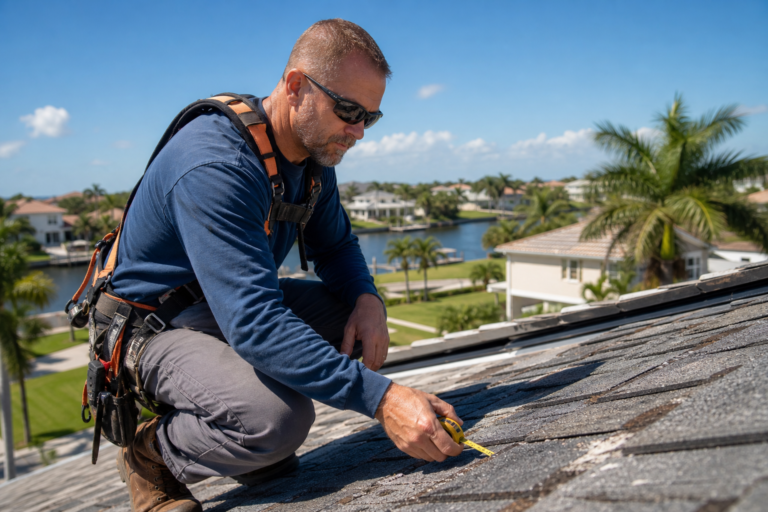
This is the most important step. A licensed roofing contractor can identify damage that isn’t visible from the ground and that an insurance adjuster might miss:
- Hidden damage — Bruised shingles, cracked underlayment, and compromised flashing don’t always show from below
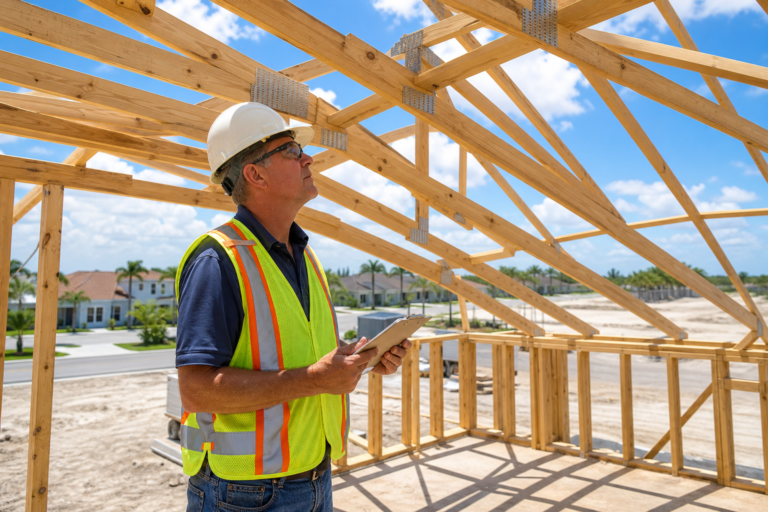
- Structural issues — Damaged decking, shifted trusses, or weakened fasteners require a trained eye
- Accurate scope of work — A detailed contractor estimate ensures your claim covers the full cost of proper repairs
At Rebuild Florida Direct, we provide free post-storm roof inspections with a comprehensive report you can submit to your insurance company.
Step 6: Avoid Storm Chasers
After every Florida hurricane, out-of-state “storm chasers” flood the area offering cheap, fast roof repairs. Be cautious:
- Never sign a contract under pressure — Legitimate contractors don’t demand immediate signatures
- Verify licensing — Check their Florida contractor license at myfloridalicense.com
- Ask for local references — Storm chasers won’t have them
- Never pay more than 10% upfront — Florida law prohibits contractors from collecting more than 10% or $1,000 (whichever is less) as a deposit before materials are delivered
- Never sign over your insurance benefits — Assignment of Benefits (AOB) agreements give the contractor control of your claim
Work with a licensed, insured, local Florida roofing company that will be here long after the storm chasers are gone.
Step 7: Get the Repairs Done Right
Once your insurance claim is approved and you’ve chosen a reputable contractor:
- Get everything in writing — Scope of work, materials, timeline, and total cost
- Confirm permits are pulled — Florida requires building permits for most roof repairs and replacements
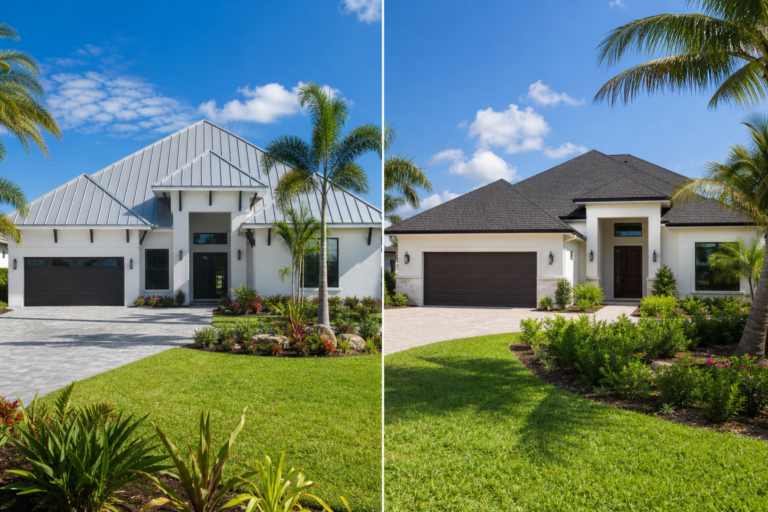
- Ensure current building code compliance — Florida’s updated codes may require upgrades beyond just replacing what was there
- Inspect the completed work — Your contractor should walk you through the finished job and provide warranty documentation
Schedule Your Free Post-Storm Inspection
If your home was affected by a hurricane or tropical storm, don’t wait. The longer you delay, the more secondary damage can occur — and the harder your insurance claim becomes.
👉 Contact Rebuild Florida Direct today to schedule your free roof inspection. We’ll document the damage, provide a detailed estimate, and help you navigate the insurance process from start to finish.
Rebuild Florida Direct is a licensed, insured roofing contractor serving homeowners across the state of Florida. We specialize in storm damage repair, full roof replacements, and honest inspections — no gimmicks, no pressure.